
D
Section D
Digital Layer
and Automation
Data flows uninterrupted from the sensor in the field to the management report.
D.1
Automation, Robotics and Network Infrastructure
The entire five-level architecture is designed and connected by a single team.

Lvl 4 · ERP
Lvl 3 · MES
Lvl 2 · SCADA
Lvl 1 · PLC / Control
Lvl 0 · Field · Sensor
Working principles
- Brand-independent hardware selection
- Source code and documentation handover
- Delivery without passwords or locks
Automation and robotics
- Control architecture and redundancy design
- Panel design, manufacturing and electrical infrastructure
- Hardware integration and on-site commissioning
- Servo axes and synchronized motion
- Robot integration: loading, assembly and welding cells
- Image processing and code reading
- HMI, alarm and recipe management
- Machine safety verification
Communication and industrial network
- Redundant fiber backbone
- Multi-protocol field integration
- Separation of office, production and safety networks
- Wireless coverage and public address systems
- Firewall and authorization matrix
Field noteThe automation level decision affects the return on investment more than the choice of equipment brand.
D.2
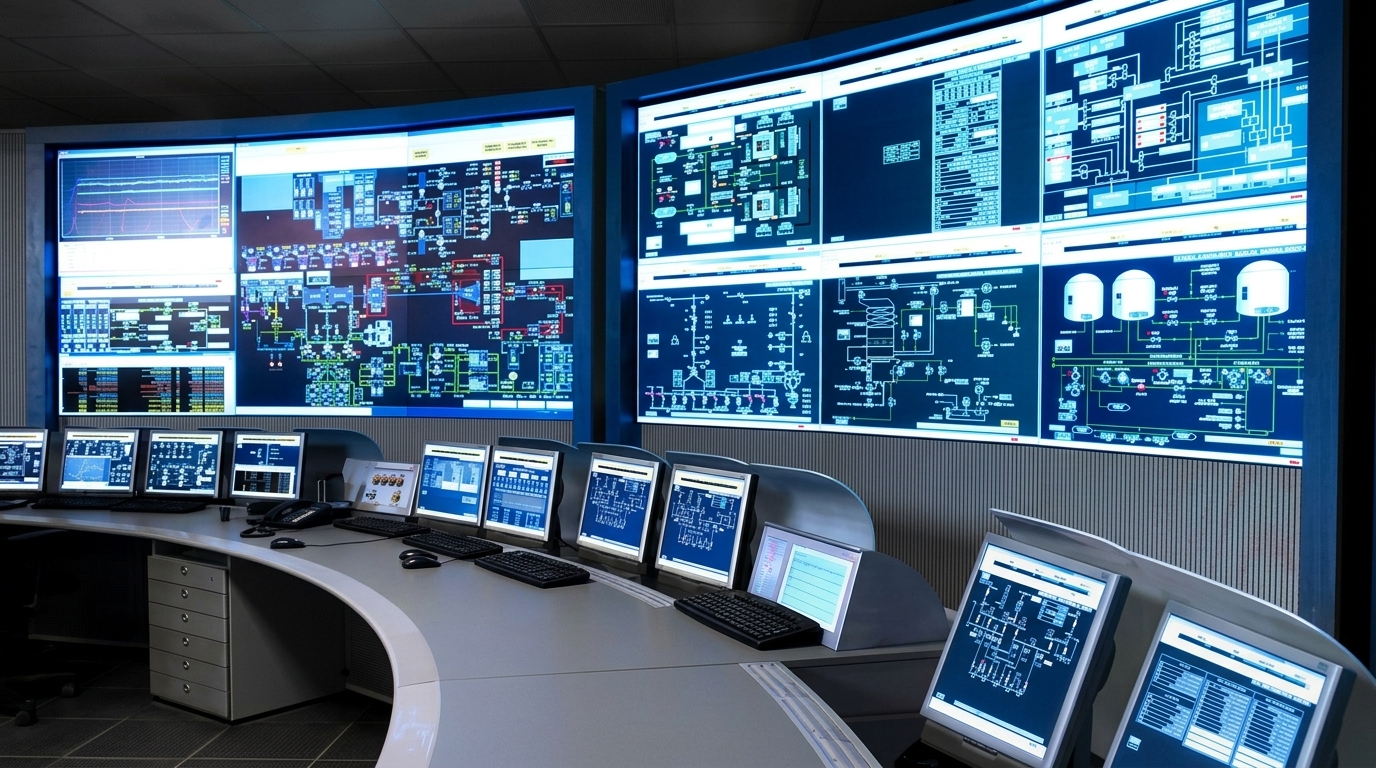
SCADA and Monitoring Rooms
The monitoring room is the nerve center of the facility; it is built as a whole, from the display wall to the alarm policy.
Software layer
- Hierarchical facility, line and station screens
- Alarm and event management
- Data history and trend analysis
- Shift, production and downtime reports
- Authorization and audit trail
Physical installation
- Video wall and display matrix
- Ergonomic operator consoles
- Glare-free lighting and acoustics
- Redundant climate control and uninterruptible power
- Server room and access control
Field noteThe success of a monitoring room is measured not by the number of screens but by the number of alarms an operator can manage.
D.3
MES, ERP and Traceability
ERP says what to produce; the field knows what was produced. MES is the translator layer between the two.
ERP · Level 4
- Order and demand management
- Material requirements planning
- Purchasing and stock
- Cost and maintenance planning
MES · Level 3
- Work order and scheduling
- Electronic work instructions
- Quality and reject management
- Downtime tracking and OEE
Field · Level 0–2
- Machine status and counters
- Process parameters
- Measurement and test results
- Code reading and approvals
Traceability chain
01 Input record02 Identification03 Process record04 Quality record05 Shipment file
Benefits
- Real-time visibility
- Elimination of paper records
- Measurable downtime causes
- Audit-ready records
- Limited recall
- Reliable delivery commitment
Legacy bench integration
- Additional sensor and counter solutions
- Status tracking with smart relays
- No need to replace the bench
Field noteIntegration projects struggle not because of software selection but because of an incompletely defined data model.